Taxus baccata, commonly known as English yew or common yew, is a slow-growing evergreen conifer valued for its dense foliage, longevity, and versatility in gardens. It is widely used for hedging, topiary, and specimen planting and can live for hundreds of years when cared for properly.

This guide covers everything you need to know about growing and caring for Taxus baccata successfully.
What Is Taxus Baccata?
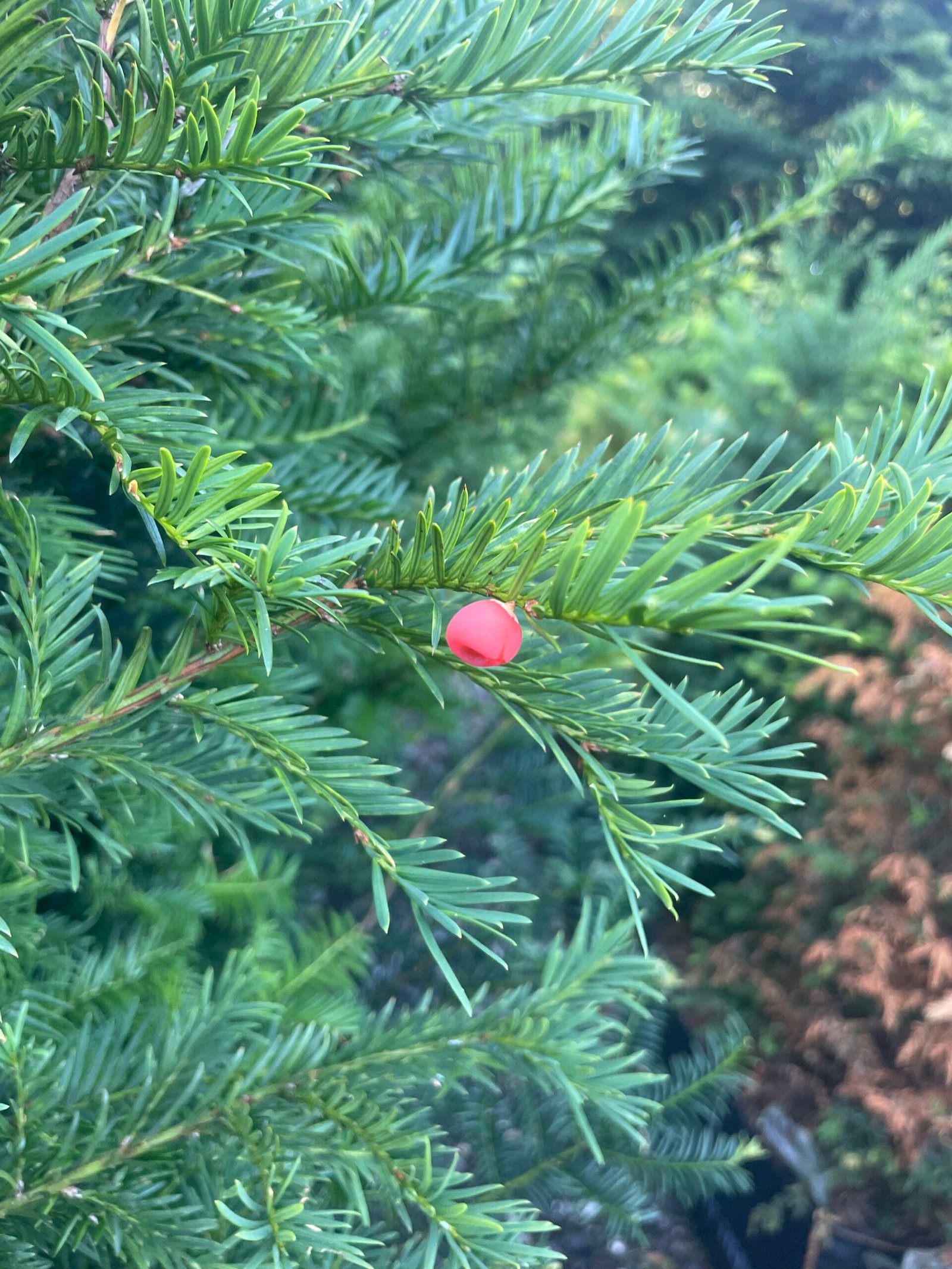
Taxus baccata is a hardy evergreen tree or shrub native to Europe. It has dark green, needle-like leaves and produces red berry-like arils on female plants. Yew is prized for its ability to tolerate pruning, shade, and a wide range of soil conditions.
Important: All parts of the yew plant are poisonous to humans and pets, except the red fleshy aril around the seed.
Ideal Growing Conditions
Sunlight
- Full sun to partial shade
- Tolerates shade better than most conifers
Soil
- Well-drained soil is essential
- Grows in loam, clay, chalk, or sandy soils
- Avoid waterlogged ground, which can cause root rot
Climate & Hardiness
- Hardy in temperate climates
- Suitable for most regions with mild to cool winters
- Resistant to frost once established
How to Plant Taxus Baccata
Best Time to Plant
- Spring or autumn is ideal
- Avoid planting during extreme heat or frozen ground
Planting Steps
- Dig a hole 2–3 times wider than the root ball
- Loosen the soil at the bottom to encourage root growth
- Place the plant at the same depth it was in the container
- Backfill with native soil mixed with compost
- Water thoroughly after planting
- Apply mulch around the base (keep mulch away from the trunk)
Spacing
- For hedges: space plants 60–90 cm (2–3 ft) apart
- For specimen plants: allow several meters for mature spread
Watering Requirements
- Water regularly during the first year
- Once established, yew is drought tolerant
- Water deeply during long dry periods
- Avoid overwatering — soggy soil is the most common problem
Fertilising Taxus Baccata
- Feed once a year in early spring
- Use a balanced slow-release fertiliser or compost
- Avoid excessive nitrogen, which can cause weak growth
Pruning and Maintenance
One of the biggest advantages of Taxus baccata is its ability to handle heavy pruning.
When to Prune
- Light pruning: late spring or summer
- Major shaping: late summer
Pruning Tips
- Always use sharp, clean tools
- Yew can regenerate from old wood
- Regular trimming keeps hedges dense and compact
Growing Taxus Baccata in Pots
Yew can be grown in containers, especially for patios or formal gardens.
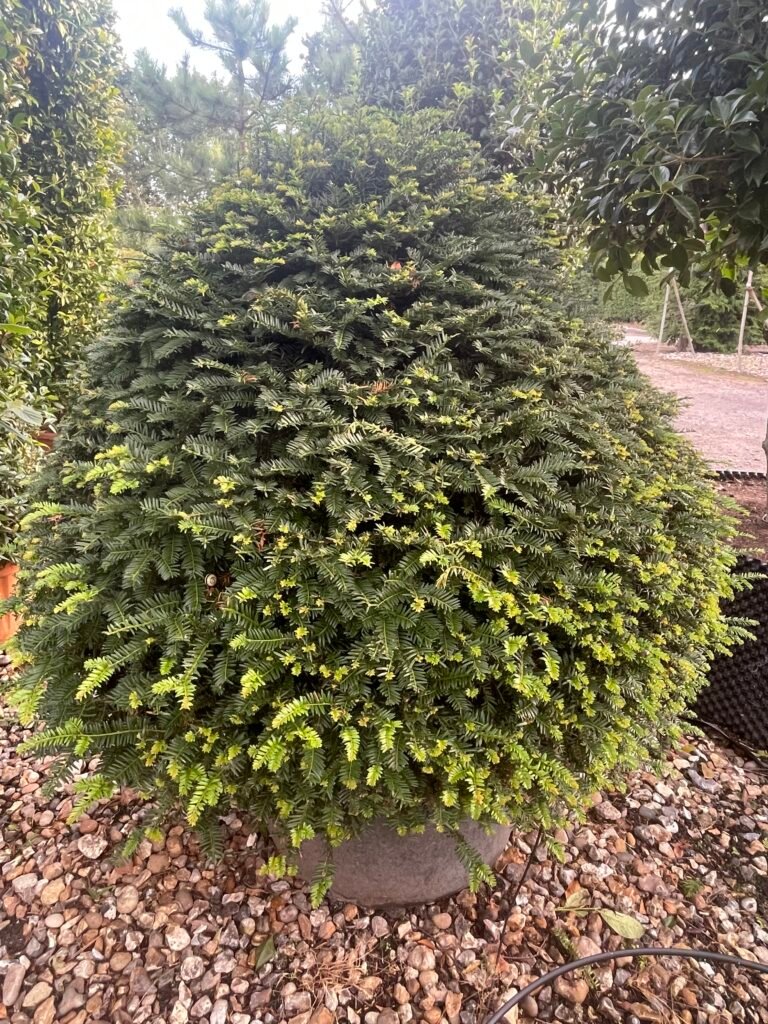
Tips for container growing:
- Use a large pot with drainage holes
- Choose free-draining compost
- Water more often than in-ground plants
- Repot every 3–4 years
Common Problems and Solutions
Yellowing Leaves
- Often caused by poor drainage
- Improve soil structure and reduce watering
Root Rot
- Caused by waterlogged soil
- Move plant or improve drainage immediately
Pests and Diseases
- Generally pest-resistant
- Occasionally affected by scale insects or aphids
- Treat early with organic or appropriate treatments
Propagating Taxus Baccata
From Cuttings
- Take semi-ripe cuttings in late summer
- Use rooting hormone
- Place in moist, well-drained compost
- Rooting may take several months
Propagation from seed is possible but very slow.
Frequently Asked Questions
Is Taxus baccata fast growing?
No. It is slow growing but extremely long-lived and durable.
Can yew grow in shade?
Yes. It performs better in shade than most evergreen plants.
Is Taxus baccata good for hedging?
Yes. It is one of the best plants for dense, long-lasting hedges.
Final Thoughts
Taxus baccata is an excellent choice for gardeners who want a low-maintenance, long-term evergreen plant. With proper planting, good drainage, and occasional pruning, yew will reward you with dense foliage and timeless structure for decades.
